
The Future of Office Design: What 2026 Has in Store
Office design is about to enter a new era. By 2026, workplaces will no longer be static, one-size-fits-all spaces; they’ll transform into living, adaptable environments that celebrate people, purpose, and the planet. The offices of tomorrow will combine flexibility, well-being and sustainability with smart technology.
The result: spaces that look great and work hard, long after installation.
Where we once focused on square footage and rigid layouts, 2026’s leading workplaces will prioritise modular design, human comfort, and resource mindfulness. From flexible furniture that adapts on a whim to offices that breathe with natural light and fresh air, the shift is clear. At the same time, smart systems will quietly optimise resource use, helping companies to create healthier, more productive environments for people.
Below, we explore the big trends and how they redefine what a modern workspace could look like.
Flexible Layouts: Offices That Move with You
From rigid to reconfigurable
As hybrid work becomes the norm, fixed layouts won’t cut it anymore. In 2026, offices will increasingly rely on movable walls, modular furniture, and multi-purpose zones so that space can adapt as teams grow, shrink or change structure. Rather than investing in expensive refurbishments, organisations will set up offices that evolve quickly and with minimal waste.
Work by activity, not by location
The trend is shifting from “here’s your desk” to “here’s where you work best.” Offices will be zoned around activities, from collaborative lounges to quiet focus pods, rather than individual roles. Hot-desking, acoustic booths and shared stations will coexist, giving people agency over where and how they work throughout the day.
Built to last, not to date
Designers will prioritise infrastructure that supports long-term flexibility, raised floors with integrated power/data, modular systems and partitions that can be reconfigured in hours, not weeks. This future-proofing mindset ensures offices are not just functional today, but fit for tomorrow’s changing needs.

Smart Technology: Spaces That Understand Us
Data-driven space optimisation
Smart offices of 2026 will embed sensors that monitor usage patterns, tracking occupancy and identifying under-utilised areas, to inform smarter space planning. This data-led approach means fewer rooms left unused, better use of existing space and reduced energy waste.
Personalised comfort zones
Modern offices will also care about subtle but essential details. Expect systems that adjust temperature, airflow, and lighting based on time of day, natural light levels, or even the number of people present. Some offices may even use biometric or occupancy data to deliver ideal comfort automatically, improving well-being, productivity, and energy efficiency.
Visualising the office before it’s built
Augmented Reality (AR) and Virtual Reality (VR) tools are fast becoming standard in design planning. With these technologies, stakeholders can walk through virtual renderings of proposed offices, try out different layouts, and ensure the space feels right, before a single wall is erected. This reduces waste and avoids costly missteps, all while streamlining the design process.
Sustainability & Wellbeing: Designing With People and Planet in Mind
Biophilic & Nature-Inspired Design
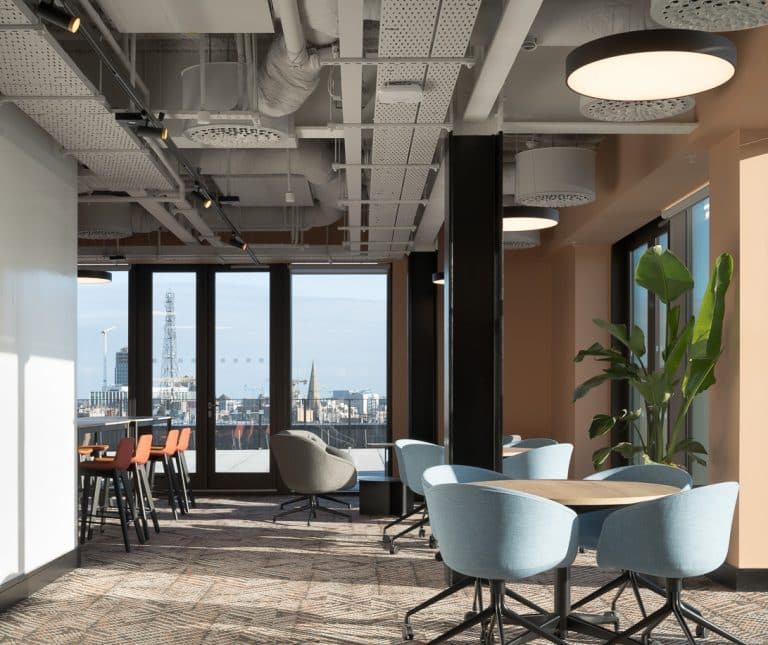
Bringing nature into offices will be more than a trend; it will be a necessity. Think natural materials, indoor plants, abundant daylight and finishes that support healthy indoor air quality. These biophilic elements don’t just look good, they support mood, mental clarity and long-term wellbeing.
Circular materials, not throwaway décor
The principles of the circular economy (design for disassembly, reuse, recycling) will become the standard for office fit-outs. Furniture, partitions, flooring and even acoustic panels will be selected for their ability to be refurbished, reconfigured, or recycled, reducing waste, embodied carbon and long-term environmental impact.
Wellness zones as core infrastructure
Workplaces won’t only facilitate work, they’ll support recovery, wellness, and community. Quiet rooms, relaxation pods, breakout spaces for yoga or stretching, and even biophilic lounges will become common. These aren’t luxuries; they are pivotal for long-term employee health, creativity, and retention.
A true commitment to sustainability
View key sustainability facts and figures for our partners’ products.
Find Out More About Bene's SustainabilityCulture, Identity & Experience: Designing for People, Not Just Productivity
Spaces that express brand values
Beyond aesthetics, office design will serve as a physical manifestation of an organisation’s purpose. From the reception to the meeting rooms, every colour, texture and layout decision will tell a story about culture, values and vision. Thoughtfully designed offices help employees feel connected to their employer’s mission, and send a clear message to clients and visitors alike.
Social spaces as creative engines
Shared spaces, kitchens, café zones, and lounges will evolve into informal collaboration hubs. These everyday interactions, over coffee or on the couch, often spark the most creative ideas. In a world of hybrid work, such social infrastructure will play a crucial role in maintaining community and fostering innovation.
The office as a destination
Rather than being a place we come to because we have to, the modern office will become somewhere we want to go. Experience-centred design, combining comfort, flexibility, wellness, and communal energy, will make offices destinations that draw people in, not push them away. In doing so, companies position their workspace not just as a cost centre, but as a strategic asset.
Why It Matters
The future of work isn’t just about where people sit, it’s about how they feel, how they interact and how we impact the world. Offices designed for flexibility, sustainability, wellness and purpose deliver far more than a place to work. They become living environments that evolve with teams, support human needs, and respect the planet.
Implementing these trends, modular layouts, sensor-driven systems, biophilic design and circular materials signals a shift in mindset: from short-term fit-outs to long-term thinking.
It means designing not just for the next quarter, but for the next decade. By doing so, companies can build workplaces that are functional, future-proof, and meaningful. In short: the offices that will thrive in 2026 won’t just be smart, they’ll be human-smart.
Let's continue the conversation
Get in touch and schedule a consultation with our frontline specialists
Take me there